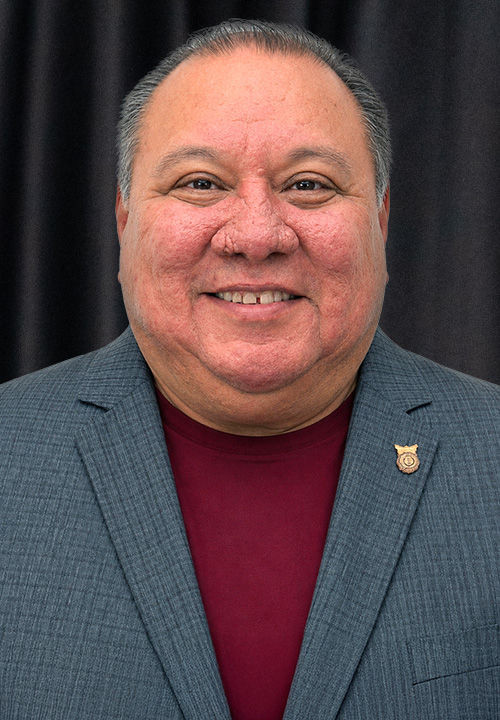
Leo Silva
I Was a DEA Agent Inside Mexico — Here's the Truth About Cartels Nobody Tells You
Leo Silva grew up in Texas, was recruited into the DEA at just 22 years old, and spent the next 28 years on the front lines of America's war on drugs — starting with undercover operations in Texas before being stationed in Monterrey Mexico as Resident Agent in Charge where he built cases against the Gulf Cartel and the infamous Los Zetas and eventually rose to Special Agent in Charge. In this episode of Locked In with Ian Bick, he shares what hunting cartels from the inside of Mexico really looked like — the undercover buys the high stakes operations the cartel violence and the bureaucracy that most people on the outside never hear about. He also breaks down how cartels have evolved over nearly three decades how Los Zetas changed everything about cartel violence and what the real truth about the war on drugs looks like from the person who lived it on the front lines for 28 years.

Diaz Aguilar
I Was a Vice Lord From Compton — Then Spent 22 Years in Mississippi's Worst Prison
Diaz Aguilar grew up in Compton California raised by a single mother who struggled with addiction — and when the streets filled the gap the Vice Lords became his family. In this episode of Locked In with Ian Bick, he shares how a trip to Chicago pulled him into the Vice Lords, how a trip to Mississippi ended with a manslaughter charge for something he says he did not do, and what losing at trial and being sentenced to 20 years in Mississippi's most brutal maximum security prison actually felt like for a Vice Lord from Compton who knew he was innocent. He opens up about the prison politics inside Mississippi's worst facility, what life as a Vice Lord inside those walls actually required of him, and what 22 years of wrongful incarceration really does to a person before they find a way to keep going.

Tamara Cook
I Was a Texas Gang Member, Dope Dealer & Pimp — Then I Got Sent to Prison
Tamara Cook grew up poor in a small Texas town with eight siblings, a mother struggling to hold everything together, and a biological father who was never in the picture — and when her babysitter started abusing her at just seven years old the life she deserved was already being taken from her before she was old enough to understand what was happening. In this episode of Locked In with Ian Bick, she shares how her mother fell into addiction and began pimping her out, how her parents splitting sent everything into further chaos, how she eventually started selling drugs herself and ultimately became a pimp — the exact monster she had always been afraid of and never wanted to become. She opens up about her own addiction the relationships the multiple children she was raising in the middle of everything, and what a seven year sentence in the Texas Department of Corrections finally did to give her back the life that started being taken from her when she was seven years old.

Cole Goldberg
My Reality TV Star Ex Accused Me of Attempted Murder at a Boat Party — Here's My Side of the Story
Cole Goldberg was 22 years old when his girlfriend — a woman who appeared on the TLC reality TV show 90 Day Fiancé: Happily Ever After — accused him of attempted murder at the 2022 Boca Bash, a massive annual boating event in Lake Boca Raton, claiming he held her head underwater during an argument on the boat. He was charged with attempted second-degree murder, domestic battery by strangulation, and simple battery — and spent nearly four years fighting those charges before finally going to trial. In this episode of Locked In with Ian Bick, he shares his complete account of what happened that day on the water, what facing an attempted murder charge for nearly four years actually required of him, why he turned down a plea deal that would have required six months in jail and three years of probation rather than accept a felony conviction, and what the judge's not guilty verdict on all counts actually produced in someone who spent four years living under the most serious accusation available.

Luis Murillo
I Rode Solo as a Mexican in Texas Prison — Here's How I Survived
Hollyhood Texus (Luis Murillo) grew up in the gang infested neighborhoods of Chicago before his family moved to Dallas, Texas hoping to give him a better life — but with his parents splitting and his teenage years split between Mexico and Texas the path toward trouble found him anyway. In this episode of Locked In with Ian Bick, he shares how robberies led to multiple stints in Dallas County Jail before a felony robbery and gun charge landed him a seven year sentence in the Texas prison system — where he faced something most inmates never have to navigate alone. As a Mexican with no gang affiliation and no crew to back him up Luis rode solo through one of the most politically charged prison systems in the country, surviving the racial politics the daily danger and a race riot that got him transferred to maximum security — before finally getting released after four and a half years and turning his life completely around.